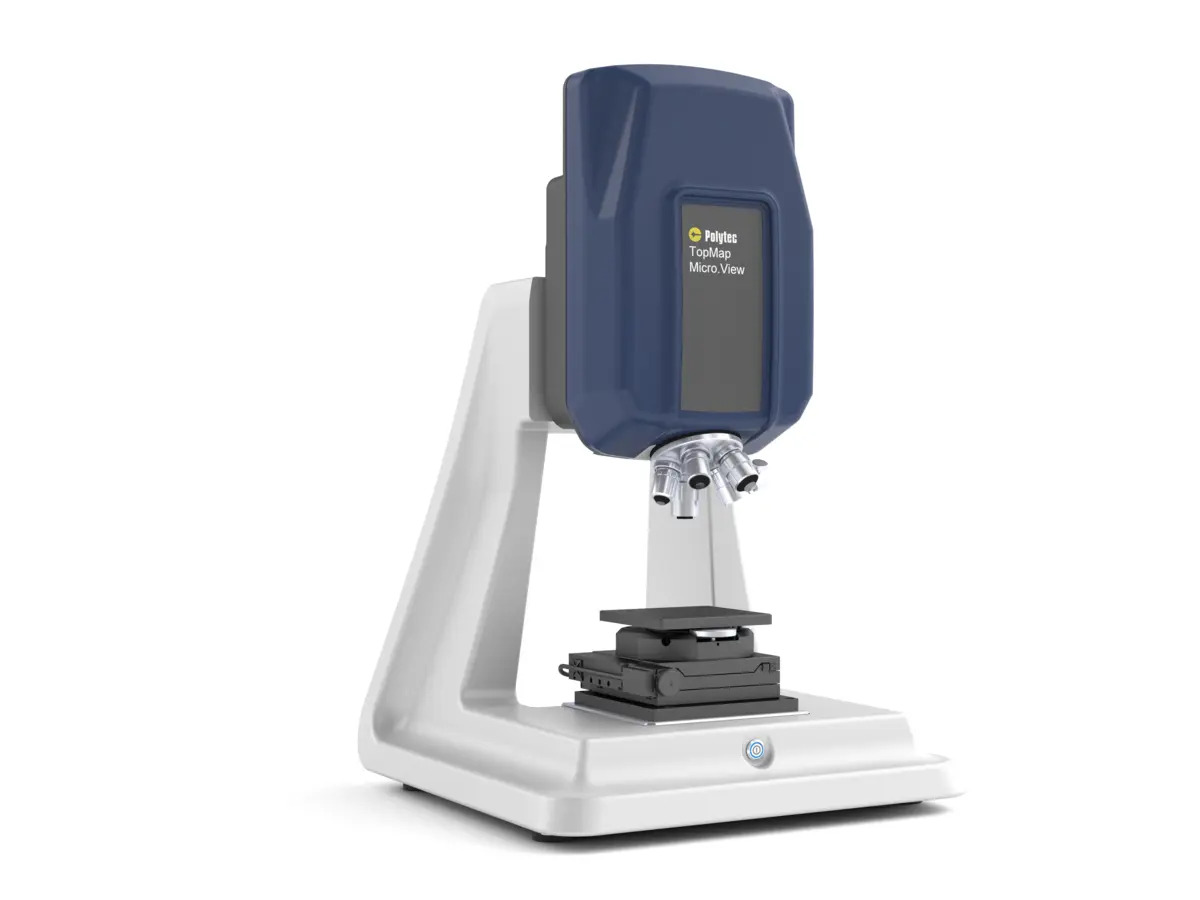
The most affordable 3D surface roughness profiler
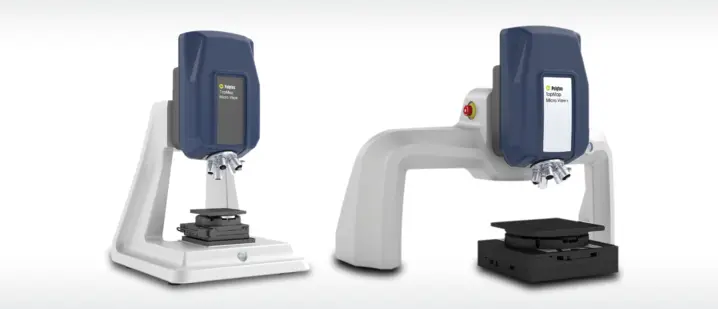
Our "Roughness Testers" are Micro.View profilers with a predefined configuration—designed as a cost-efficient entry systems. They deliver reliable 3D surface roughness and texture analysis using the same high-precision sensor head for accurate measurements on matte to highly reflective components.
- ISO-compliant roughness evaluation:
R parameters for profile lines and S parameters for full surface evaluation - Compact table-top design
- Automated XY stage (optional)
- Upgrade guarantee (attractive trade-in options if your need additional automation features)
Book a meeting now with one of our experts
and discuss your surface roughness demands
A solid, high quality profiler to start with areal, non-contact roughness measurements
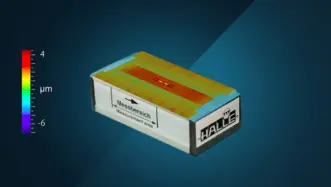
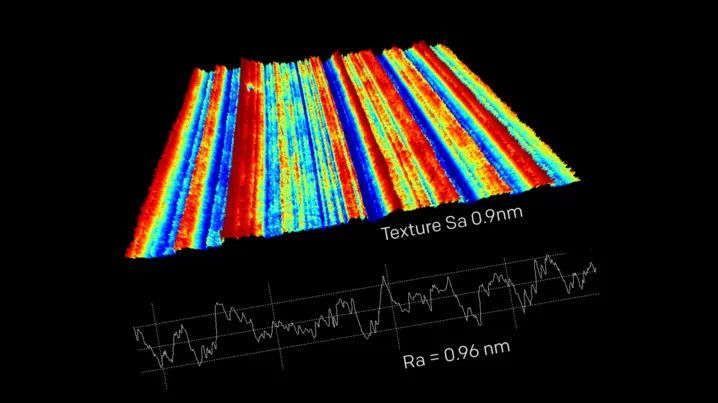
With the Micro.View roughness tester configurations, you capture classic roughness "line" parameters (Ra, Rz,...) but also real areal data (Sa, Sq,..)—fast, non-contact and repeatable.
And optical profilers have more advantages: Unlike stylus measurements, optical surface profilers capture the complete 3D topography and there is no risk of damaging the surface of the sample.
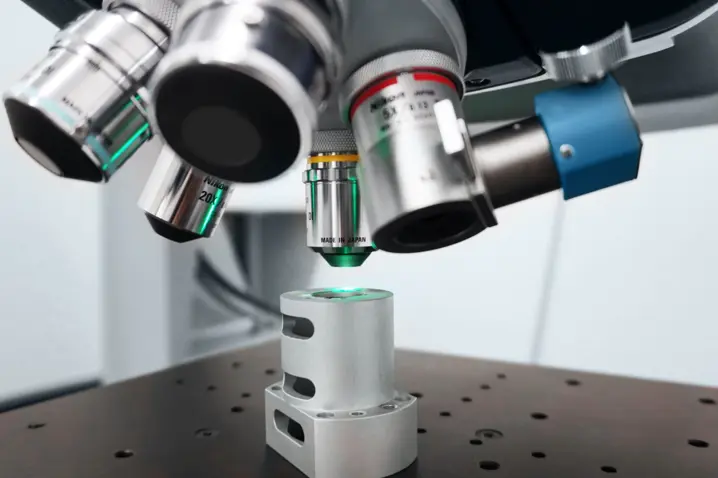
Many conventional optical profilers struggle with highly reflective, dark, low-contrast, or transparent materials. Micro.View overcomes this using the embedded correlogram and SST smart scanning technologies, which allows multiple scans at different acquisition settings. This enables reliable measurements even on complex materials.
The result: precise 3D data for roughness, microstructures, step heights, and flatness evaluations — even on the most challenging surfaces.
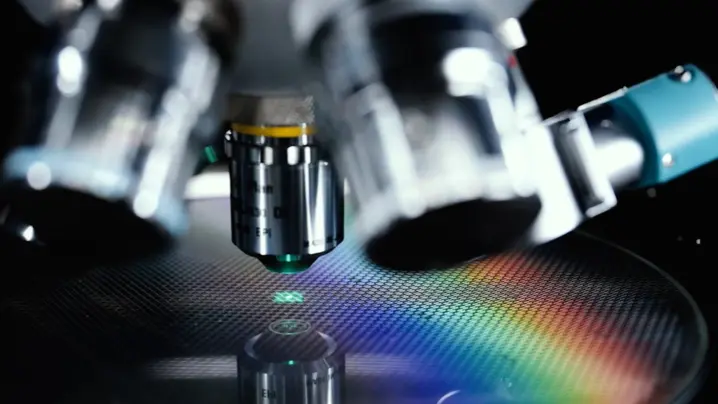
With decades of experience, our engineers combined phase and envelope evaluation of the correlogram with inherently low system noise. This results in sub-nanometer vertical resolution and outstanding 3D data clarity.
This level of precision empowers engineers to verify tight tolerances, optimize production, and ensure long-term reliability.
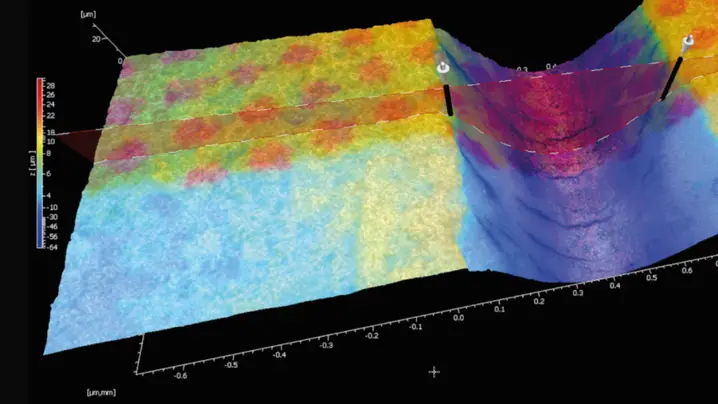
When to move from tactile surface roughness gauges to optical profilers?
For decades stylus instruments measure a single line in an efficient way to quickly inspect R profile parameters. In comparison to classic surface roughness gauges, modern optical profilers evaluate entire areas. Such areal S profile parameters are requested by current standards like ISO 25178.
We see multiple customers stepping up to measure optically the surface properties. The major reasons for that shift are:
- Measure sensitive or soft surfaces without damage
- Capture full surface texture instead of single traces
- Detect functional issues earlier and more reliably
- Save time through faster area measurement
- Compliance to newer industrial standards
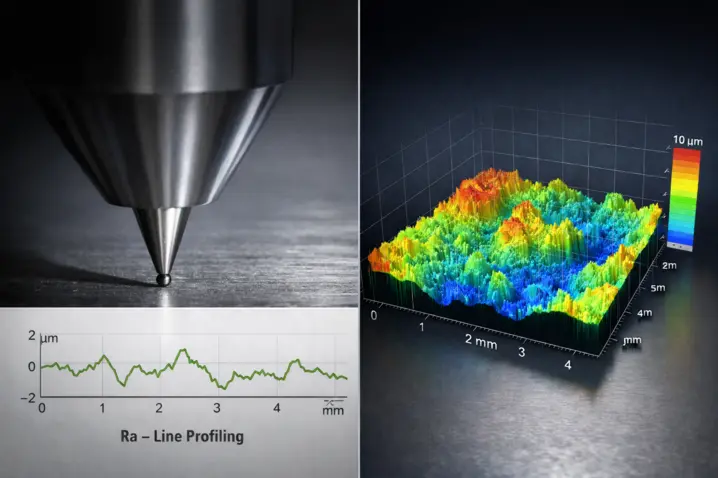
Polytec Roughness Tester configurations
With 100 mm Z measurement range and the CST Continuous Scanning Technology, the Roughness Tester measures complex topographies at sub-nm resolution. This convenient table-top setup features integrated electronics and is easy to commission and operate.
The Roughness Tester is delivered in a predefined configuration to offer maximum performance at an optimized entry price. Both roughness tester configurations offer all functionality needed for typical roughness evaluations:
- Sensor head with sub-nm resolution capability and 5-port objective turret
- Compact base stand with integrated vibration isolation
- 10x objective (more objectives optionally available)
- Software for roughness evaluations according to industry standard
(ISO 25178, ISO 4287, ISO 4288, ISO 21920 and ASME B46.1)
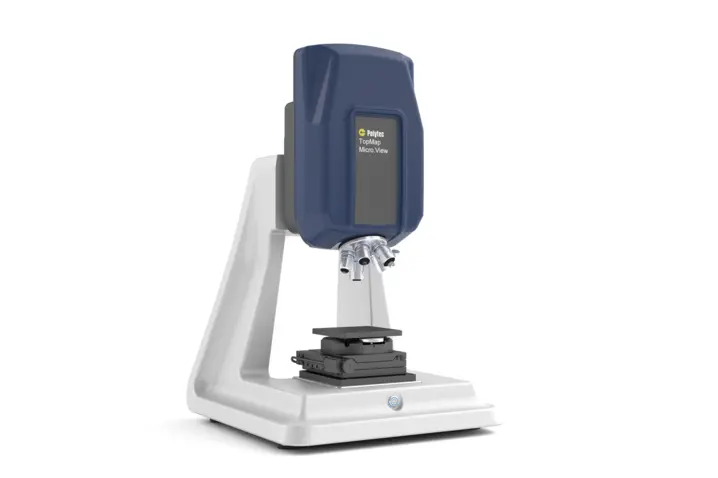
What options are available?
Basic version
Our basic roughness tester is the most budget-friendly profiler for standard components and simple roughness measurement. Its integrated manual tip/tilt stage allows to align the sample perpendicular to the optical axis.
Advanced version
In case of mid-sized samples and the need for automation, this configuration is our recommendation. It features a motorized 75 mm xy position stage with manual tip/tilt mechanism. This makes sample alignment easy and reproducible opening the door for automation and extending the measurement range by True Stitching.
Roughness Tester Specification
| Surface topography performance | Vertical range (positioning & measurement) | 100 mm |
| Measurement noise | < 0.6 nm | |
| Repeatability | < 0.2 nm | |
| Measurement | Sample reflectivity | 0.05 to 100 % |
| Measurement area 1 | 0.79 mm x 0.58 mm | |
| Maximum measurement area with True Stitching 1 | 171 mm2 | |
| Measurement point spacing 1 | 0.59 µm | |
| Data points | 1.352.000 (effective pixels) | |
| Sample positioning | Sample table size | 140 mm x 140 mm |
| xy stage | Basic: None Advanced: 75 mm motorized travel (x and y) | |
| Tip/tilt stage | Manual | |
| Software | Evaluation parameters according to industry standards | ISO 25178, ISO 4287, ISO 13565, ISO 21920, ASME B46.1 |
| Automation features | Measurement and evaluation recipies, True Stitching (with motorized xy stage) |
1 with 10x objective
Downloads
Q&A for surface roughness measurement
What is an optical surface roughness tester?
An optical surface roughness tester uses light-based technology (e.g., white light interferometry) to measure surface topography without touching the sample. Unlike stylus-based instruments that trace a single 2D profile, optical testers capture the full 3D surface in a single measurement, delivering both R-parameters (Ra, Rz) and areal S-parameters (Sa, Sz) according to ISO 25178.
What is the difference between Ra and Sa roughness parameters?
Ra (arithmetic average roughness) is measured along a single 2D profile line. Sa is the 3D equivalent, calculated over an entire surface area. Sa provides a more comprehensive and statistically reliable characterization of surface roughness, as defined in ISO 25178.
Why choose non-contact over stylus roughness measurement?
Non-contact optical measurement eliminates the risk of surface damage, enables full 3D areal analysis instead of single-line profiles, achieves sub-nanometer vertical resolution, and measures over 1 million data points per scan. It is ideal for delicate surfaces, quality control, and research applications.
| Criterion | Stylus | Optical |
|---|---|---|
| Principle | 2D single line profiling with contact | 3D areal profiling without contact |
| Parameter | R-parameters only (Ra, Rz) | R- and S-parameters (Ra, Sa, Sz …) |
| Resolution | Micrometer range | Sub-nanometer |
| ISO 25178 | No | Yes |
| ISO 4278, 13565, 21920 | Yes | Yes |
| Wear / maintenance | Wear of stylus, regular replacement required | No wear from measurement |
| Repeatability | Good but can vary due to stylus wear | Very high, stable repeatability |
What ISO standards does the Polytec Roughness Tester comply with?
The Polytec Roughness Tester supports evaluation according to ISO 25178 (areal surface texture), ISO 4287 (profile roughness), ISO 13565 (bearing ratio), ISO 21920 (profile method), and ASME B46.1.
Who is the Roughness Tester for?
- Quality control labs who have to comply with the latest standards
- High quality manufacturing need precise surface finishing and processes
- Universities & teaching labs
- R&D departments who need in-depth surface insights (e.g. tribology, etc.)
Book a meeting to discuss your metrology demands with our metrology experts
Talk to our application experts about your requirements and explore the best options for your metrology task—from a first exchange of know-how to a free feasibility study or our rental options with PolyRent.

You need more?
In case you need more features and abilities, the Micro.View+ can be a great option:
- Larger and fully motorized sample stages
- Measurement of tall samples (up to 370 mm)
- Motorized objective turret
- Closed loop operation with Focus Tracker
- Color View for enhanced visualization and defect detection
- In-line integration of sensor head
Take a look at our Micro.View family with modular configuration options and advanced automation features. If you are unsure use our options to talk to our experts, start a free feasibility study or rent a system with PolyRent.